0
Ζεστάνετε τον προμαγειρεμένο αμάρανθο σε μικρή κατσαρόλα σε χαμηλή φωτιά, προσθέτοντας 50 γραμμάρια νερό και ανακατεύοντας απαλά κάθε λεπτό περίπου. Θερμάνετε για περίπου 5 λεπτά μέχρι οι κόκκοι να βγάζουν ατμό, να είναι τρυφεροί και να μυρίζουν ελαφρά καβουρδισμένοι — πρέπει να φαίνονται ελαφριοί και να ξεχωρίζουν μεταξύ τους όταν τους χαλαρώσετε με ένα πιρούνι. Αφήστε τους στην άκρη καλυμμένους για να παραμείνουν ζεστοί.
1
Ενώ ζεσταίνεται ο αμάρανθος, ψιλοκόψτε τις σκελίδες σκόρδου, κόψτε το λευκό κρεμμύδι σε μικρά ομοιόμορφα κομμάτια, και τα καρότα μαζί με το σέλερι σε λεπτά μπαστουνάκια ή ψιλά κυβάκια — η ομοιομορφία στο κόψιμο εξασφαλίζει ότι όλα θα μαγειρευτούν στον ίδιο χρόνο. Ψιλοκόψτε χοντρά το φρέσκο σπανάκι και τα φύλλα αμάρανθου μαζί σε μια χαλαρή, φυλλώδη στοίβα και αφήστε τα στην άκρη.
2
Ζεστάνετε 15 γραμμάρια ελαιόλαδο σε ένα μεγάλο, βαθύ τηγάνι σε μέτρια φωτιά μέχρι να αστράψει και να απλώνεται εύκολα στον πάτο, περίπου 1 λεπτό. Προσθέστε το σκόρδο και το κρεμμύδι, ανακατεύοντας συχνά, και σοτάρετε για 4–5 λεπτά μέχρι το κρεμμύδι να γίνει διαφανές και οι άκρες του να αρχίσουν να παίρνουν ένα ελαφρύ χρυσαφί χρώμα — η κουζίνα πρέπει να μυρίζει γλυκά και δελεαστικά.
3
Προσθέστε τα κυβάκια καρότου και σέλερι στο τηγάνι, ανακατεύοντας καλά για να καλυφθούν με το λάδι. Μαγειρέψτε για 3–4 λεπτά, ανακατεύοντας κατά διαστήματα, μέχρι τα λαχανικά να αρχίσουν να μαλακώνουν στις άκρες αλλά να διατηρούν το σχήμα τους. Ρίξτε 1 γραμμάριο πάπρικα, 2 γραμμάρια σπόρους κύμινου, μια πρέζα αλάτι και λίγο φρεσκοτριμμένο πιπέρι, και ανακατεύετε συνεχώς για 30 δευτερόλεπτα μέχρι τα μπαχαρικά να ανθίσουν και να γεμίσουν το τηγάνι με ένα ζεστό, γήινο άρωμα.
4
Ανακατέψτε μέσα τα μαγειρεμένα ρεβίθια, την ψιλοκομμένη φρέσκια ντομάτα, το μείγμα σπανακιού και φύλλων αμάρανθου, και τον κλαδίσκο φρέσκου θυμαριού. Ρίξτε 100 γραμμάρια νερό και αφήστε το τηγάνι να φτάσει σε ήπιο βρασμό, στη συνέχεια χαμηλώστε τη φωτιά. Μαγειρέψτε, ανακατεύοντας κατά διαστήματα, για 8–10 λεπτά μέχρι τα χόρτα να μαραθούν και να γίνουν γυαλιστερές κορδέλες, τα ρεβίθια να ζεσταθούν καλά και το υγρό να έχει μειωθεί σε ένα ελαφρύ, αρωματικό ζουμί που κολλάει στα λαχανικά.
5
Εν τω μεταξύ, ετοιμάστε τη σάλτσα βερίκοκου-αμυγδάλου: ψιλοκόψτε χοντρά τα αποξηραμένα βερίκοκα και βάλτε τα σε μικρή κατσαρόλα μαζί με 240 γραμμάρια γάλα αμυγδάλου χωρίς ζάχαρη. Φέρτε σε ήπιο βρασμό σε μέτρια φωτιά και μαγειρέψτε για 5–6 λεπτά, ανακατεύοντας κατά διαστήματα, μέχρι τα βερίκοκα να φουσκώσουν, να μαλακώσουν και να αρχίσουν να διαλύονται στις άκρες τους. Ανακατέψτε μέσα 30 γραμμάρια φρέσκο χυμό λεμονιού και 2 γραμμάρια σπόρους κύμινου — η σάλτσα πρέπει να μυρίζει γλυκά, ξινά και αρωματικά.
6
Αποσύρετε το μείγμα βερίκοκου-αμυγδάλου από τη φωτιά και πολτοποιήστε με ένα ραβδομπλέντερ για 1–2 λεπτά μέχρι η σάλτσα να γίνει λεία και να ρέει εύκολα· εναλλακτικά, μεταφέρετε προσεκτικά σε επιτραπέζιο μπλέντερ, πολτοποιήστε και επιστρέψτε στην κατσαρόλα. Αλατοπιπερώστε με μια πρέζα αλάτι και λίγο φρεσκοτριμμένο πιπέρι, δοκιμάζοντας καθώς πηγαίνετε. Για ιδιαίτερα βελούδινο αποτέλεσμα, περάστε τη σάλτσα από ψιλή σήτα — αν και μερικές χρυσές νιφάδες βερίκοκου προσθέτουν υπέροχο ρουστίκ χαρακτήρα.
7
Δοκιμάστε το μείγμα ρεβιθιών και λαχανικών για τελευταία φορά, ρυθμίζοντας το αλάτι και το πιπέρι μέχρι οι γεύσεις να είναι ισορροπημένες και ζωντανές. Αφαιρέστε τον κλαδίσκο θυμαριού. Μοιράστε τον ζεστό αμάρανθο εξίσου σε τέσσερα φαρδιά, ρηχά μπολ, σχηματίζοντας ένα μαλακό, φιλόξενο βουναλάκι στο κέντρο του καθενός.
8
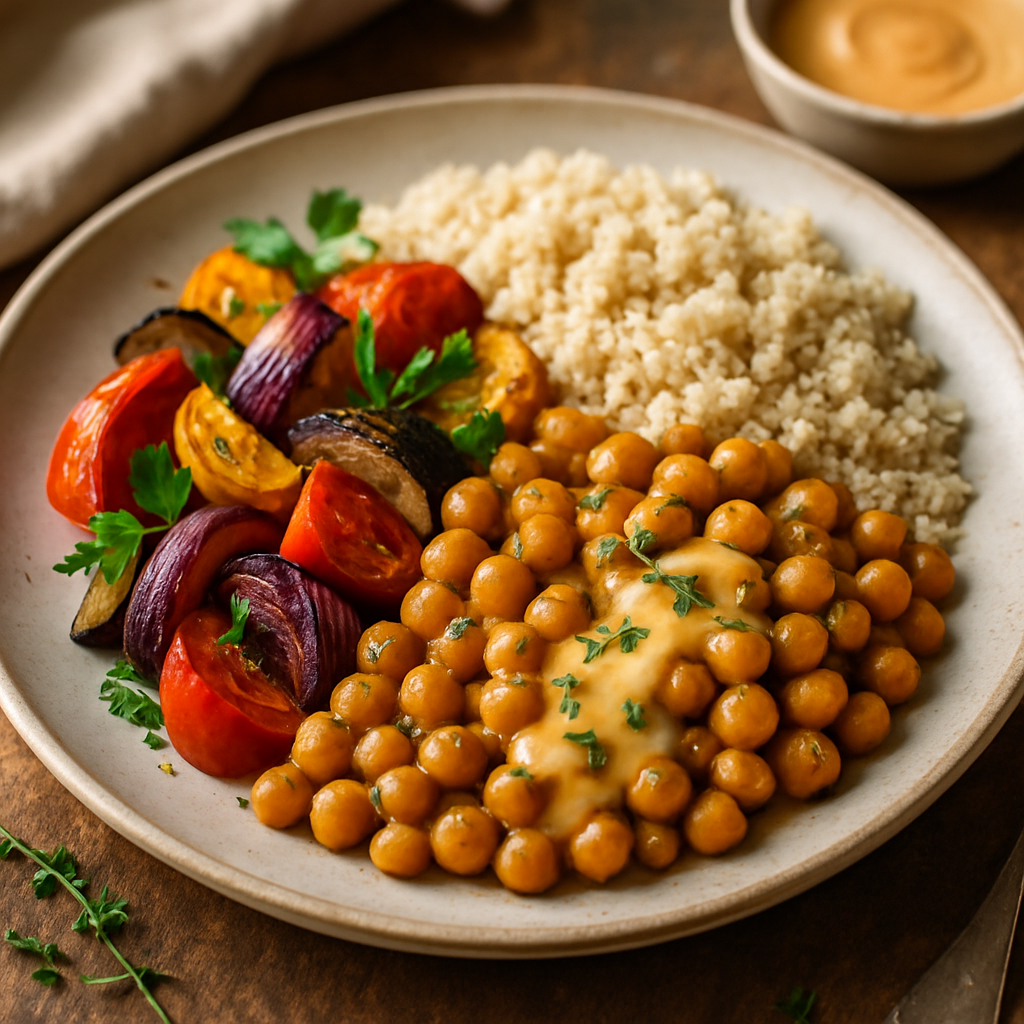
Μοιράστε γενναιόδωρα το ζεστό μείγμα ρεβιθιών και λαχανικών πάνω από τη βάση αμάρανθου σε κάθε μπολ, αφήνοντάς το να απλωθεί φυσικά πάνω στους κόκκους. Περιχύστε κάθε μπολ με τη σάλτσα βερίκοκου-αμυγδάλου σε γενναία ραντίσματα, αφήνοντάς την να μαζευτεί ελαφρώς στους κόκκους και να αναμειχθεί με τα μπαχαρικά από το μαγείρεμα. Τελειώστε κάθε μπολ με μια μικρή φωλιά φρέσκων φύτρων αλφάλφα και μερικές λεπτές, τραγανές φέτες μήλου για μια φρέσκια, δροσερή τραγανή νότα.
9
Σερβίρετε τα μπολ αμέσως ενώ όλα τα στοιχεία είναι ζεστά και τα αρώματα στο αποκορύφωμά τους — κύμινο, θυμάρι, γλυκό βερίκοκο και γήινος αμάρανθος να υψώνονται μαζί σε ένα ενιαίο, αρμονικό άρωμα. Ένα τελευταίο ριγάρισμα καλού ελαιολάδου από πάνω προσθέτει μια μεταξένια, χορτώδη πλούσια νότα αν το επιθυμείτε. Ενθαρρύνετε τους καλεσμένους να ανακατεύουν τα στρώματα καθώς τρώνε, ώστε κάθε κουταλιά να φέρει λίγο από όλα.