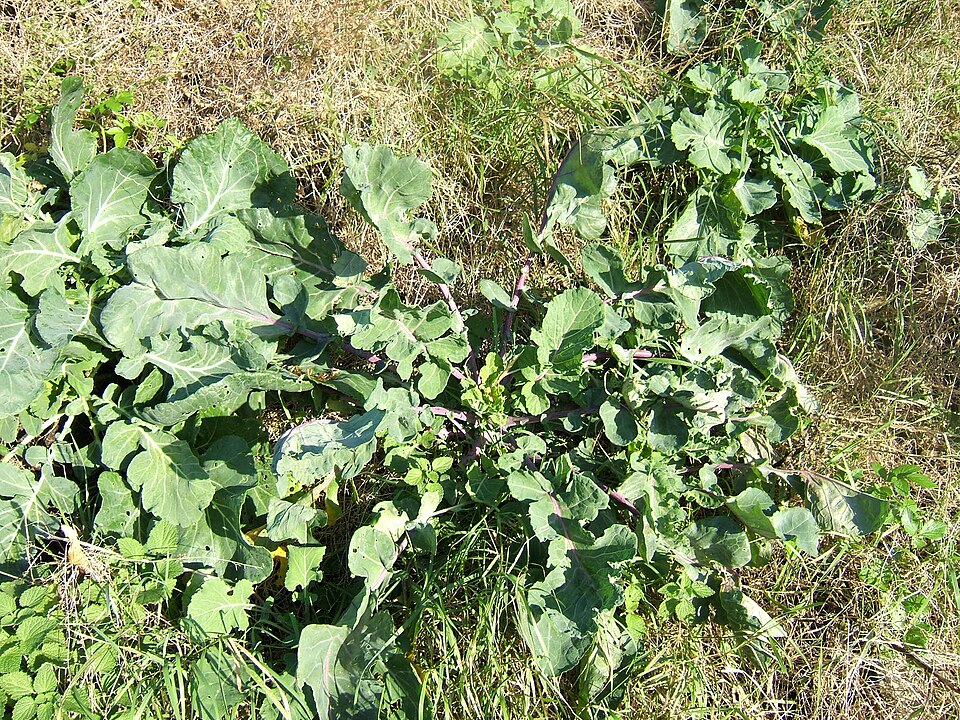
Photo: MPF CC BY 2.5 via Wikimedia Commons
Nutrition per 100g
Full Nutrition Breakdown per 100g
Per 100 g, Collards also provides 1.1 mg iron, 141.0 mg calcium, 117.0 mg potassium, 21.0 mg magnesium, 0.230 mg zinc and 32.0 mg phosphorus.
Research findings
Each finding is a claim distilled from a published study, with an honest verdict on how strongly the wider literature backs it.
-
Kale (Brassica oleracea L. var. acephala) is a good source of fiber, minerals, bioavailable calcium, unsaturated fatty acids, prebiotic carbohydrates, and vitamins.
CorroboratedRCT PMID 39519473 -
The verum product provides 10 mg lutein and 3 mg zeaxanthin per day.
CorroboratedRCT PMID 24103519 -
The distribution of xanthophylls in the macula seems to be more dynamic than originally assumed.
CorroboratedRCT PMID 24103519 -
Glutathione S-transferase (GST) forms a multigene family of phase II detoxification enzymes involved in detoxification of reactive oxygen species.
CorroboratedCohort study PMID 25671068 -
Glucosinolates and their concentrations varied among the different groups and within each group of Brassica oleracea.
CorroboratedCohort study PMID 10564014 -
The predominant glucosinolates in broccoli were glucoraphanin, gluconapin, and glucobrassicin.
CorroboratedCohort study PMID 10564014 -
Glucoraphanin concentration in broccoli ranged from 0.8 micromol g(-1) DW in EV6-1 to 21.7 micromol g(-1) DW in Brigadier.
CorroboratedCohort study PMID 10564014 -
Concentrations of the other glucosinolates in broccoli varied widely.
CorroboratedCohort study PMID 10564014 -
In kale, the predominant glucosinolates were sinigrin and glucobrassicin.
CorroboratedCohort study PMID 10564014 -
Sinigrin concentration in kale was 10.4 micromol g(-1) DW.
CorroboratedCohort study PMID 10564014
Showing the 10 most relevant corroborated findings of 1825. Search above to explore the rest.
Lab & mechanism studies (175)
-
Phytochemical analysis of the ethanol extract from Brassica oleracea var. viridis (Collard green) leaves revealed the presence of flavonoids, alkaloids, phenolic compounds, fatty acids, and terpenoids.
CorroboratedMechanistic PMID 41098508 -
GC-MS analysis of the collard green ethanol extract identified 77 bioactive compounds.
CorroboratedMechanistic PMID 41098508 -
Among the identified compounds in collard green extract were 2-Methoxy-4-vinylphenol, 2, 7-Dimethyl-1, 7-octadien-3-amine, Octadecanoic acid, 9, 12, 15-Octadecatrienoic acid, Pentadecanoic acid, and several phenolic derivatives.
CorroboratedMechanistic PMID 41098508 -
The phytochemicals in collard greens exert their beneficial action through antioxidant, anti-inflammatory, and possibly neuroprotective properties.
CorroboratedMechanistic PMID 41098508 -
Brassica oleracea var. viridis (collard greens) is noted for its antioxidant and endocrine-modulating properties.
CorroboratedMechanistic PMID 40927167 -
Crop concentrations of Pb varied widely within replicate samples of both arugula and collards.
CorroboratedMechanistic PMID 26280370 -
The study presents the first successful regeneration of protoplast-derived plants of collard, an overlooked but valuable variety of Brassica oleracea.
CorroboratedMechanistic PMID 39736572 -
Collard green aqueous extract is rich in several phytochemical compounds.
CorroboratedMechanistic PMID 32990547 -
Collard green aqueous extract exerts an important antioxidant activity.
CorroboratedMechanistic PMID 32990547 -
The expected 0.65-kb PCR product was amplified from three of four strains, two from turnip and one from collards, and from the positive control DNA, but not from the negative controls.
CorroboratedMechanistic PMID 30823318
Recipes with Collards
No recipes use this food yet.
Built for nutritionists. See how it grows your practice →