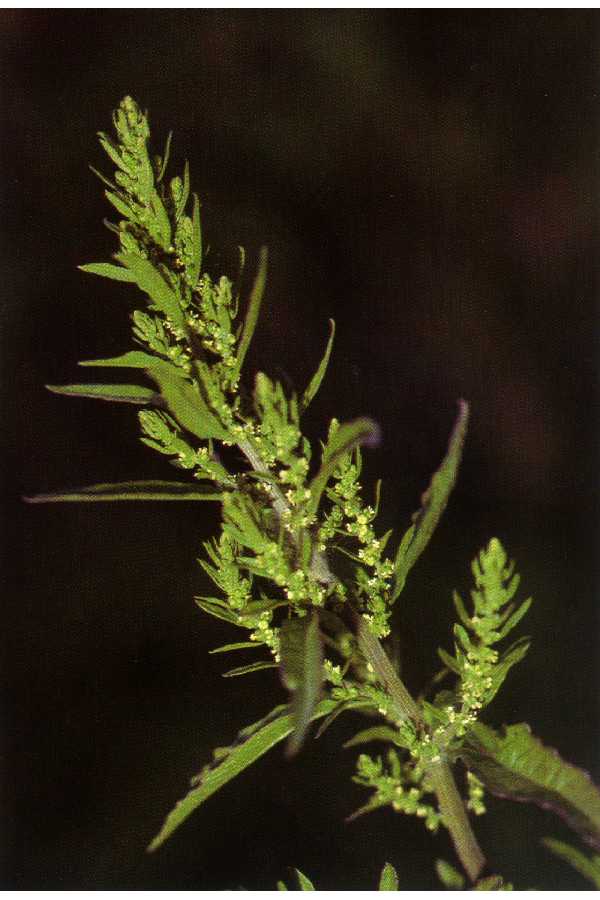
Photo Public domain via Wikimedia Commons
Nutrition per 100g
Full Nutrition Breakdown per 100g
Per 100 g, Epazote also provides 1.9 mg iron, 275.0 mg calcium, 633.0 mg potassium, 121.0 mg magnesium, 1.1 mg zinc and 86.0 mg phosphorus.
Research findings
Each finding is a claim distilled from a published study, with an honest verdict on how strongly the wider literature backs it.
-
Ascaridole is an endoperoxide monoterpene with a distinctive peroxide bridge.
CorroboratedSystematic review PMID 41213362 -
Ascaridole is predominantly sourced from Dysphania ambrosioides.
CorroboratedSystematic review PMID 41213362 -
Commercial preparations of oil of chenopodium and its active constituent ascaridol are obtained by steam distillation.
CorroboratedCohort study PMID 3906906 -
Gas-liquid chromatographic analyses of plant samples consistently demonstrated the presence of ascaridol in the expected amounts.
CorroboratedCohort study PMID 3906906 -
The ARE population of Dysphania ambrosioides had a chemotype of α-terpinene 65.35%, o-cymene 24.83% and ascaridole 3.30%.
CorroboratedCohort study PMID 41681538 -
The PAS population of Dysphania ambrosioides had a chemotype of α-terpinene 56.31%, o-cymene 10.09% and ascaridole 10.84%.
CorroboratedCohort study PMID 41681538 -
The PIN population of Dysphania ambrosioides had a chemotype of α-terpinene 56.89%, o-cymene 17.07% and ascaridole 7.60%.
CorroboratedCohort study PMID 41681538 -
The essential oil yield of Dysphania ambrosioides was low, at 0.030-0.064% w/w.
CorroboratedCohort study PMID 41681538 -
The PIN essential oil of Dysphania ambrosioides showed moderate ABTS activity (SC50 = 112.26 ± 1.01 µg/mL).
CorroboratedCohort study PMID 41681538
Showing the 9 most relevant corroborated findings of 1902. Search above to explore the rest.
Lab & mechanism studies (191)
-
Organic acids were identified in aqueous epazote (AE) and ethanolic extract of epazote (ETHE) using ultra-high-performance liquid chromatography-quadrupole time-of-flight (UHPLC-qTOF).
CorroboratedMechanistic PMID 32442827 -
The essential oil of Brazilian epazote (Chenopodium ambrosioides L.) was evaluated for antifungal activity using the poison food assay at concentrations of 0.3%, 0.1%, and 0.05%.
CorroboratedMechanistic PMID 18679750 -
The epazote essential oil contained (Z)-ascaridole at 61.4% relative percent.
CorroboratedMechanistic PMID 18679750 -
The epazote essential oil contained (E)-ascaridole at 18.6% relative percent.
CorroboratedMechanistic PMID 18679750 -
The epazote essential oil contained carvacrol at 3.9% relative percent.
CorroboratedMechanistic PMID 18679750 -
The epazote essential oil contained alpha-terpinene at 0.9% relative percent.
CorroboratedMechanistic PMID 18679750 -
The epazote essential oil contained piperitone at 0.9% relative percent.
CorroboratedMechanistic PMID 18679750 -
The epazote essential oil contained p-cimen-8-ol at 0.6% relative percent.
CorroboratedMechanistic PMID 18679750 -
The epazote essential oil contained (E)-piperitol acetate at 0.5% relative percent.
CorroboratedMechanistic PMID 18679750 -
The epazote essential oil contained (Z)-carvyl acetate at 0.3% relative percent.
CorroboratedMechanistic PMID 18679750
Recipes with Epazote
No recipes use this food yet.
Built for nutritionists. See how it grows your practice →