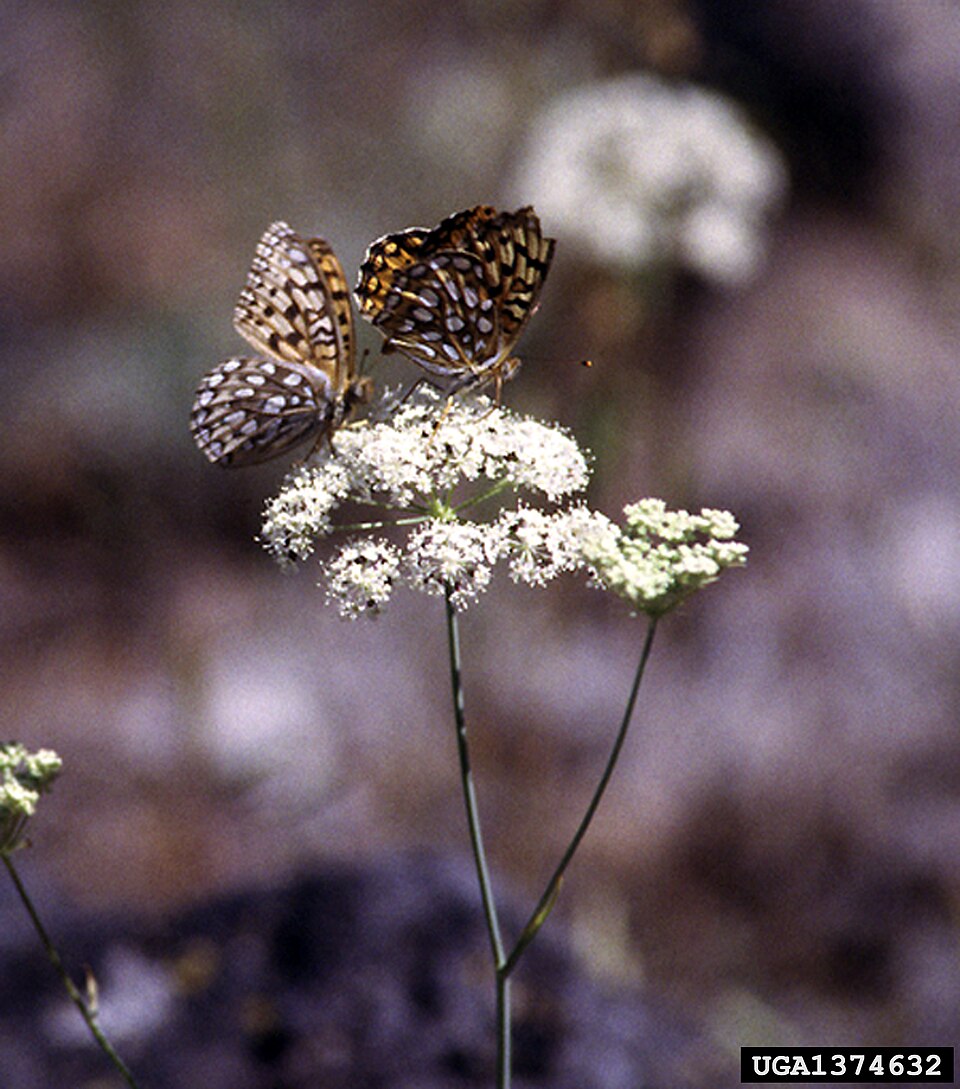
Photo: Terry Spivey, USDA Forest Service, United States Public domain via Wikimedia Commons
Nutrition per 100g
Full Nutrition Breakdown per 100g
Per 100 g, Eppaw also provides 1.1 mg iron, 110.0 mg calcium, 340.0 mg potassium, 32.0 mg magnesium, 1.1 mg zinc and 165.0 mg phosphorus.
Research findings
Each finding is a claim distilled from a published study, with an honest verdict on how strongly the wider literature backs it.
The corroborated findings for this food are preclinical or lab studies rather than human dietary research.
-
The main components of essential oils from flowers of A. urticifolia (AUF) were menthone (2.7%), isomenthone (2.6%), pulegone (78.9%), and limonene (4.2%).
CorroboratedMechanistic PMID 37514257 -
Essential oils from the inflorescence of A. millefolium (AMI) were high in α-thujone (17.1%) and β-thujone (14.9%), 1,8-cineole (17.0%), camphor (13.0%), sabinene (7.0%), guaia-3,9-dien-11-ol (3.2%), and terpinen-4-ol (2.5%).
CorroboratedMechanistic PMID 37514257 -
Essential oils from the inflorescence of P. gairdneri (PGI) contained high amounts of dillapiole (30.3%), p-cymen-8-ol (14.1%), terpinolene (12.0%), 4-hydroxy-4-methyl-cyclohex-2-enone (6.2%), and γ-terpinene (2.4%).
CorroboratedMechanistic PMID 37514257 -
Pretreatment with P. gairdneri essential oil or dillapiole inhibited neutrophil chemotaxis induced by fMLF.
CorroboratedMechanistic PMID 37514257 -
Dillapiole may be a novel modulator of human neutrophil function.
CorroboratedMechanistic PMID 37514257
Recipes with Eppaw
No recipes use this food yet.
Built for nutritionists. See how it grows your practice →