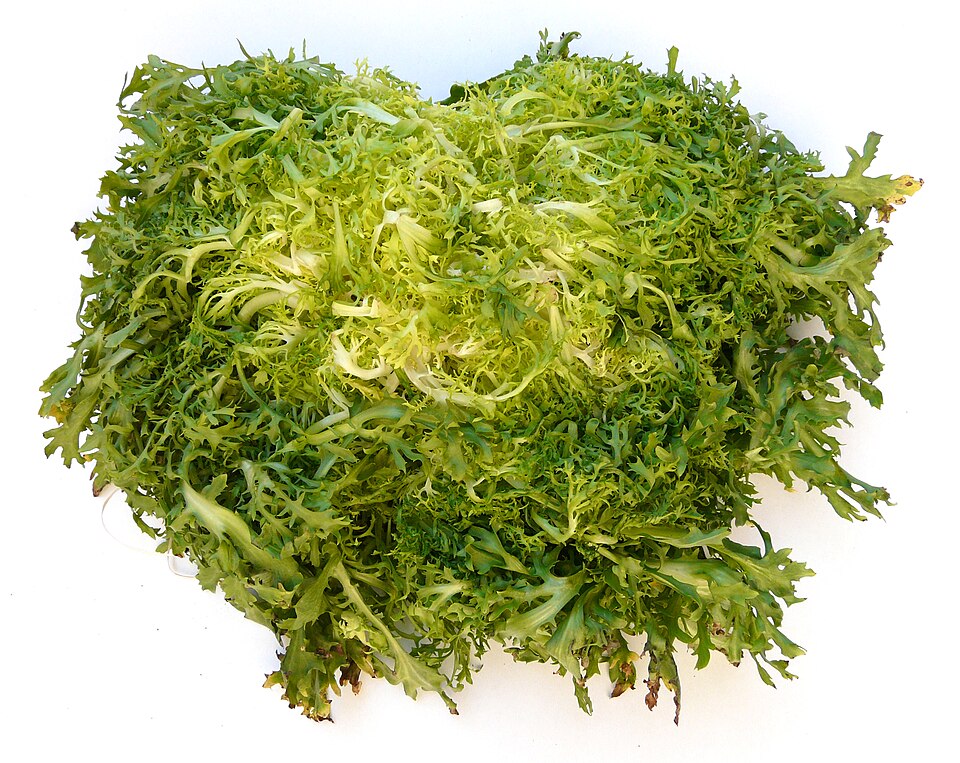
Photo: Photograph: Frank C. Müller , Baden-Baden CC BY-SA 3.0 via Wikimedia Commons
Nutrition per 100g
Full Nutrition Breakdown per 100g
Per 100 g, Escarole, cooked, boiled, drained, no salt added contains 0.230 g of total sugars.
Per 100 g, Escarole also provides 0.720 mg iron, 46.0 mg calcium, 245.0 mg potassium, 13.0 mg magnesium, 0.690 mg zinc and 22.0 mg phosphorus.
Research findings
Each finding is a claim distilled from a published study, with an honest verdict on how strongly the wider literature backs it.
-
The popularity of Cichorium endivia is attributed to its healthy properties, mainly due to its high levels of antioxidant compounds and high content of minerals, provitamin A and vitamins.
CorroboratedRCT PMID 23184906 -
Brassinosteroids are a family of plant hormones that serve as potent growth promoters.
CorroboratedRCT PMID 23184906 -
Biofilms are likely to influence the microenvironment and phenotype of the microorganisms they harbor.
CorroboratedCohort study PMID 15259273 -
Broad-leaved endive (Cichorium endivia var. latifolia) harbors biofilms containing fluorescent pseudomonads.
CorroboratedCohort study PMID 15259273 -
Gram-positive bacteria tended to occur more frequently within biofilms than outside of biofilms on broad-leaved endive leaves.
CorroboratedCohort study PMID 15259273 -
Leaf colonization by fluorescent pseudomonads is suggested to involve a flux of cells between biofilm and solitary states.
CorroboratedCohort study PMID 15259273 -
Biofilms would favor resistance to stressful conditions, whereas solitary cells could foster spread of bacteria to newly colonizable sites on leaves.
CorroboratedCohort study PMID 15259273 -
Lactucopicrin was consistently related to bitterness, astringency and herbaceous flavour perceptions.
CorroboratedCohort study PMID 26775966 -
Kaempferol malonyl glucoside was consistently related to bitterness, astringency and herbaceous flavour perceptions.
CorroboratedCohort study PMID 26775966 -
Factors other than an increase in concentration of airborne bacteria can lead to increases in bacterial population sizes at leaf emergence as broad-leaved endive plants age in the field.
CorroboratedCohort study PMID 16534973
Showing the 10 most relevant corroborated findings of 1033. Search above to explore the rest.
Lab & mechanism studies (177)
-
The antioxidant potential of the escarole extracts was evaluated using cell-free and cell-based assays, as well as their cytotoxic and anti-inflammatory activity.
CorroboratedMechanistic PMID 37507941 -
Significant differences between the three investigated escarole cultivars emerged in the cell-based assays.
CorroboratedMechanistic PMID 37507941 -
The data on escarole extract activities were ascribed to the content of polyphenols and sesquiterpenes in the extracts.
CorroboratedMechanistic PMID 37507941 -
Metabolomic profiling revealed AMF-dependent changes in the chemical profile and multiple metabolic pathways of escarole plants.
CorroboratedMechanistic PMID 42531652 -
7165 metabolic features were altered in escarole under nitrogen limitation, and 58% of them increased in mycorrhizal plants.
CorroboratedMechanistic PMID 42531652 -
Principal component analysis separated mycorrhizal and non-mycorrhizal escarole plants, with PC1 explaining 49% of the chemical variability under nitrogen limitation.
CorroboratedMechanistic PMID 42531652 -
The growth improvement in AMF-inoculated escarole plants grown under hydromulching conditions was mainly associated with upgrading of nitrogen and phosphorous use efficiency through regulation of hormonal balance.
CorroboratedMechanistic PMID 36297821 -
Both hydromulching and AMF inoculation increased the active gibberellins and cytokinins in escarole plants.
CorroboratedMechanistic PMID 36297821 -
Phase II conjugates of most of these sesquiterpene lactone metabolites are detected in the urine of healthy volunteers after escarole salad intake.
CorroboratedMechanistic PMID 32970341 -
Glucuronides and sulfates of dihydrolactucopicrin, tetrahydrolactucopicrin, dihydrolactucin, and deoxylactucin are detected in the urine after escarole salad intake, although with large inter-subject variability.
CorroboratedMechanistic PMID 32970341
Recipes with Escarole
No recipes use this food yet.
Built for nutritionists. See how it grows your practice →