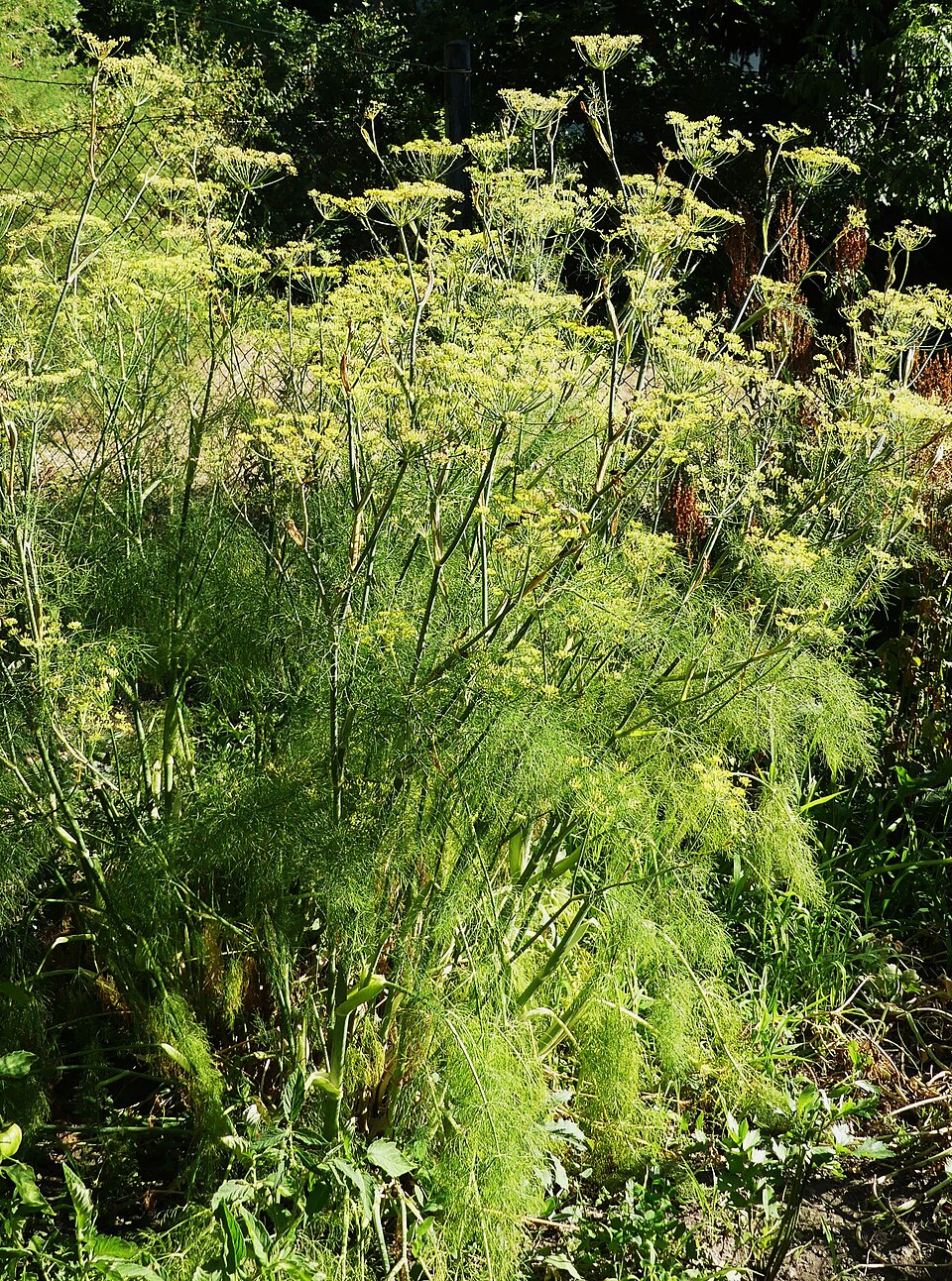
Photo: Elekes Andor CC BY 4.0 via Wikimedia Commons
Nutrition per 100g
Full Nutrition Breakdown per 100g
Per 100 g, Fennel, bulb, raw contains 3.9 g of total sugars.
Per 100 g, Fennel also provides 0.730 mg iron, 49.0 mg calcium, 414.0 mg potassium, 17.0 mg magnesium, 0.200 mg zinc and 50.0 mg phosphorus.
Origins & cultivation
- Top producing countries
- India · Mexico · Syrian Arab Republic
- About
- species of plant, fennel (for the herb use Q104005460) Read more on Wikipedia ↗
Production data: FAO FAOSTAT (2024) · CC BY 4.0
Research findings
Each finding is a claim distilled from a published study, with an honest verdict on how strongly the wider literature backs it.
-
Fennel oil contained almost two-thirds anethol.
CorroboratedRCT PMID 17083431 -
Fennel oil contained approximately one-fifth fenchon.
CorroboratedRCT PMID 17083431 -
The remaining part of fennel oil consisted of alpha + beta-pinen, limonen (p-mentha-1,8-dien) and estragol.
CorroboratedRCT PMID 17083431 -
Microarray analysis of small intestine tissue showed mRNA expression changes in 261 genes in the FEO50 group, with 206 upregulated and 55 downregulated.
CorroboratedRCT PMID 38330242 -
Microarray analysis showed mRNA expression changes in 302 genes in the FEO100 group, with 218 upregulated and 84 downregulated.
CorroboratedRCT PMID 38330242 -
Microarray analysis showed mRNA expression changes in 292 genes in the FEO200 group, with 231 upregulated and 61 downregulated.
CorroboratedRCT PMID 38330242 -
Microarray analysis showed mRNA expression changes in 348 genes in the FEO400 group, with 268 upregulated and 80 downregulated.
CorroboratedRCT PMID 38330242 -
Most upregulated genes were associated with catalytic activity, binding, transcription regulators and transcription factors, anatomical structure and cellular development, and protein binding activity modulators.
CorroboratedRCT PMID 38330242 -
The downregulated genes mostly belonged to the transporter, carrier, and protein-modifying enzyme classes.
CorroboratedRCT PMID 38330242 -
Trans-anethole was found in fennel essential oil at 54.14-90.44%.
CorroboratedCohort study PMID 41057429
Showing the 10 most relevant corroborated findings of 1407. Search above to explore the rest.
Lab & mechanism studies (183)
-
The antioxidant activity of wild, edible, and medicinal fennel from different Mediterranean countries was determined.
CorroboratedMechanistic PMID 18303817 -
The total phenolic and flavonoid contents of wild, edible, and medicinal fennel from different Mediterranean countries were determined.
CorroboratedMechanistic PMID 18303817 -
Individual flavonoids and phenolic acids of wild, edible, and medicinal fennel from different Mediterranean countries were quantitatively determined.
CorroboratedMechanistic PMID 18303817 -
Tunisian and French fennel seed cultivars contained the same main essential oil compounds but differed in their proportions.
CorroboratedMechanistic PMID 31368565 -
Differences in essential oil compound proportions allowed Tunisian and French fennel cultivars to be classified into two chemotypes.
CorroboratedMechanistic PMID 31368565 -
The first chemotype class was composed of trans-anethole at 63.41%-78.26% for Tunisian fennel cultivars.
CorroboratedMechanistic PMID 31368565 -
The second chemotype class was composed of estragole at 44.72%-88.92% for French fennel cultivars.
CorroboratedMechanistic PMID 31368565 -
The phenolic composition of all fennel seed extracts was characterized by richness in quinic acid, 4-O-caffeoylquinic acid, p-coumaric acid, and 4-O-caffeoylquinic acid.
CorroboratedMechanistic PMID 31368565 -
The most important identified compounds in all samples of fennel volatile oils were trans-anethole, estragole, fenchone, limonene, alpha-pinene and gamma-terpinene.
CorroboratedMechanistic PMID 20201277 -
The chemical composition of fennel, especially of its volatile fraction, depends on the origin of the plant and the ecological and environmental conditions in which it grows.
CorroboratedMechanistic PMID 21870762
Recipes with Fennel
No recipes use this food yet.
Built for nutritionists. See how it grows your practice →