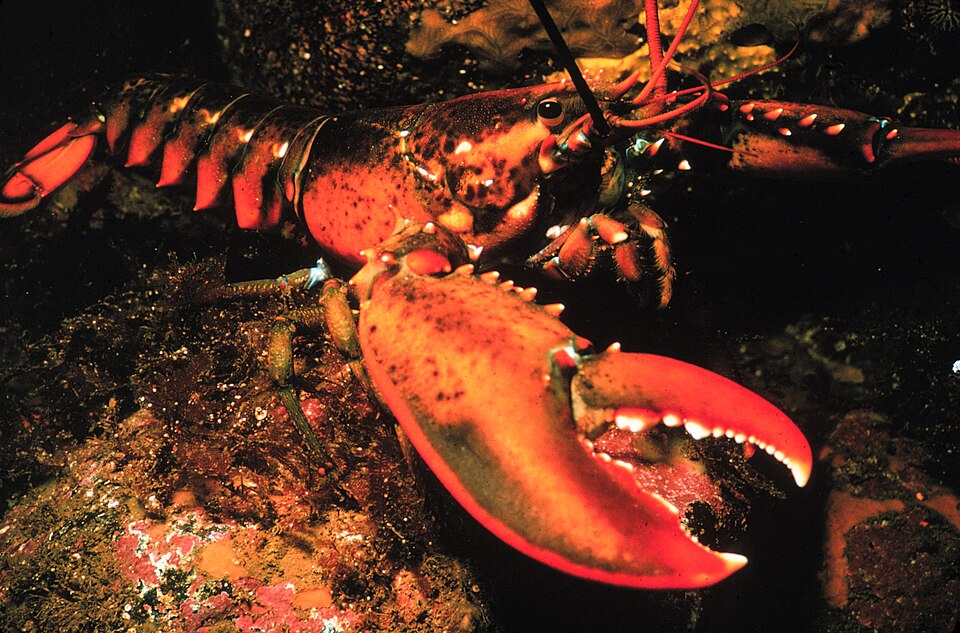
Photo: OAR/National Undersea Research Program (NURP). Public domain via Wikimedia Commons
Nutrition per 100g
Full Nutrition Breakdown per 100g
Per 100 g, lobster, northern also provides 0.290 mg iron, 96.0 mg calcium, 230.0 mg potassium, 43.0 mg magnesium, 4.0 mg zinc and 185.0 mg phosphorus.
Research findings
Each finding is a claim distilled from a published study, with an honest verdict on how strongly the wider literature backs it.
-
Fishing effort followed rather than led changes in American lobster abundance over time.
CorroboratedSystematic review PMID 25418350 -
No significant changes in the metals bound to metallothionein were observed in American lobsters across the molt cycle.
CorroboratedCohort study PMID 11570806 -
Copper-MT was the predominant form throughout the molt cycle in the American lobsters studied.
CorroboratedCohort study PMID 11570806 -
Copper-MT was presumably predominant because the lobsters were obtained from copper-contaminated areas.
CorroboratedCohort study PMID 11570806 -
Hg in ambient water was undetectable, indicating that Hg in lobster tissues reflects bioaccumulation.
CorroboratedCohort study PMID 40236643 -
Seasonal factors such as spring river runoff, lobster migration, and inert biological cycles may influence Hg content in American lobster.
CorroboratedCohort study PMID 40236643 -
The majority of bacteria cultured from American lobster haemolymph were opportunistic pathogens commonly found in the environment, including some associated with sewage and pollution.
CorroboratedCohort study PMID 18086031 -
Anophryoides haemophila is the causative agent of 'bumper car' disease in lobsters.
CorroboratedCohort study PMID 11710558 -
Aerococcus viridans is the causative agent of gaffkemia in lobsters.
CorroboratedCohort study PMID 11710558 -
Hierarchical clustering analysis revealed that the carapace microbiota of lobsters with ESD was closely related to the green gland microbiota.
CorroboratedCohort study PMID 37089549
Showing the 10 most relevant corroborated findings of 1917. Search above to explore the rest.
Lab & mechanism studies (186)
-
A structurally closely related non-respiratory pseudo-hemocyanin (PHc) of the American lobster, Homarus americanus, was identified and cDNA cloned.
CorroboratedMechanistic PMID 10224079 -
After 48 h chlorpyrifos exposure, surviving lobsters were processed for Illumina RNA sequencing (RNA-seq).
CorroboratedMechanistic PMID 34688176 -
Changes to gene expression were most notable in lobsters exposed to 0.57 μg/L chlorpyrifos.
CorroboratedMechanistic PMID 34688176 -
A total of 564 genes were differentially expressed in the testis of lobsters with ESD.
CorroboratedMechanistic PMID 40821945 -
A total of 105 genes were differentially expressed in the intestine of lobsters with ESD.
CorroboratedMechanistic PMID 40821945 -
A total of 333 genes were differentially expressed in the hepatopancreas of lobsters with ESD.
CorroboratedMechanistic PMID 40821945 -
A total of 112 genes were differentially expressed in the green gland of lobsters with ESD.
CorroboratedMechanistic PMID 40821945 -
Homarus americanus SAA is likely a good clinical marker for immune activation in lobsters and some crustaceans.
CorroboratedMechanistic PMID 24981290 -
Only one gene, Trypsin 1b, was found to be differentially regulated during bacterial, microparasitic and viral challenges in lobster.
CorroboratedMechanistic PMID 24981290 -
Bioinformatic analysis identified the few shared patterns of differential gene expression in lobsters in response to bacterial, parasitic and viral challenge.
CorroboratedMechanistic PMID 24981290
Recipes with lobster, northern
No recipes use this food yet.
Built for nutritionists. See how it grows your practice →