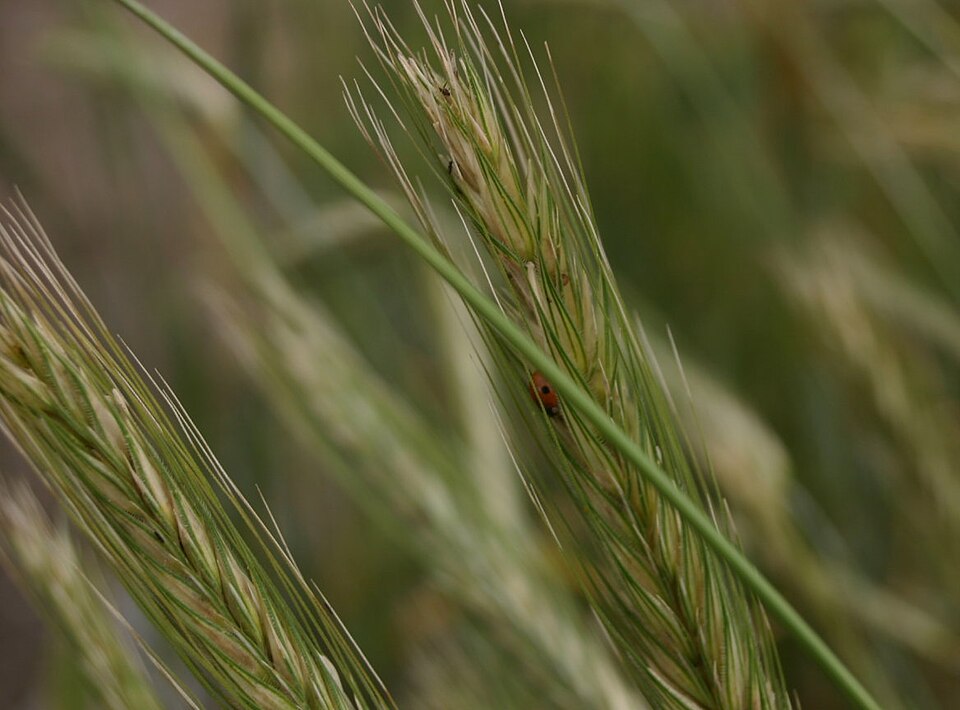
Photo: Sten Porse CC BY-SA 3.0 via Wikimedia Commons
Nutrition per 100g
Πλήρης ανάλυση διατροφής ανά 100g
Per 100 g, Couscous, cooked contains 0.100 g of total sugars.
Per 100 g, Couscous also provides 0.380 mg iron, 8.0 mg calcium, 58.0 mg potassium, 8.0 mg magnesium, 0.260 mg zinc and 22.0 mg phosphorus.
Research findings
Each finding is a claim distilled from a published study, with an honest verdict on how strongly the wider literature backs it.
-
Couscous required shorter oral processing time (14 ± 10 s) than spaghetti (21 ± 13 s) and penne (23 ± 14 s).
CorroboratedRCT PMID 34669959 -
Couscous was described as steamed, extracted wheat flour semolina.
CorroboratedCohort study PMID 8332588 -
The glycemic index of couscous was 99.0±36.0%.
CorroboratedCohort study PMID 32227786 -
Couscous is classified as a high glycemic index food.
CorroboratedCohort study PMID 32227786 -
SSR, AFLP, and seed storage protein markers showed a high level of polymorphism (>60%).
CorroboratedCohort study PMID 14676946 -
The durum map showed high synteny with previous wheat maps, with SSRs and AFLPs mapping evenly across the genome and more markers in the B genome.
CorroboratedCohort study PMID 14676946 -
Some rearrangements were observed in the durum genetic map.
CorroboratedCohort study PMID 14676946 -
Gluten strength is mainly determined by high- and low-molecular-weight glutenin subunits (HMW-GS and LMW-GS).
CorroboratedCohort study PMID 40439070 -
Semolina yellowness is determined by loci that control carotenoid content and lipoxygenase activity.
CorroboratedCohort study PMID 40439070 -
Arabinoxylans are the major dietary fibre component within the durum wheat endosperm.
CorroboratedCohort study PMID 40439070
Showing the 10 most relevant corroborated findings of 1850. Search above to explore the rest.
Εργαστηριακές & μηχανιστικές μελέτες (178)
-
Couscous is traditionally produced by agglomerating Triticum durum semolina with water.
CorroboratedMechanistic PMID 29184252 -
Pasta and couscous are traditionally manufactured from durum wheat semolina.
CorroboratedMechanistic PMID 28892013 -
Sixteen commercial samples of pasta and four samples of couscous were analysed for free, hydrolysable bound and total polyphenol content using the Folin-Ciocalteu procedure.
CorroboratedMechanistic PMID 28892013 -
Baseline wheat couscous contained zinc at 1.49 mg/100 g, iron at 2.74 mg/100 g, and magnesium at 42.00 mg/100 g.
CorroboratedMechanistic PMID 41992803 -
Whole quinoa couscous contained zinc at 4.63 mg/100 g, iron at 8.09 mg/100 g, and magnesium at 209.34 mg/100 g.
CorroboratedMechanistic PMID 41992803 -
DHA and EPA were detected only in the 100% quinoa couscous, at 8.06 and 22.03 mg/100 g, respectively.
CorroboratedMechanistic PMID 41992803 -
The cooking quality of 50% quinoa couscous was the closest to that of wheat-based couscous.
CorroboratedMechanistic PMID 41992803 -
Whole quinoa couscous provides a naturally gluten-free alternative.
CorroboratedMechanistic PMID 41992803 -
Bread had an SDS/av starch value of 11.78 ± 2.63%, following couscous.
CorroboratedMechanistic PMID 37238882 -
Total free phenolic compounds content in control couscous was 182 μg/100 g d.m.
CorroboratedMechanistic PMID 32156404
Συνταγές με Couscous
Δεν βρέθηκαν ακόμη συνταγές για αυτό το τρόφιμο.
Σχεδιασμένο για διατροφολόγους. Δείτε πώς αναπτύσσει το ιατρείο σας →